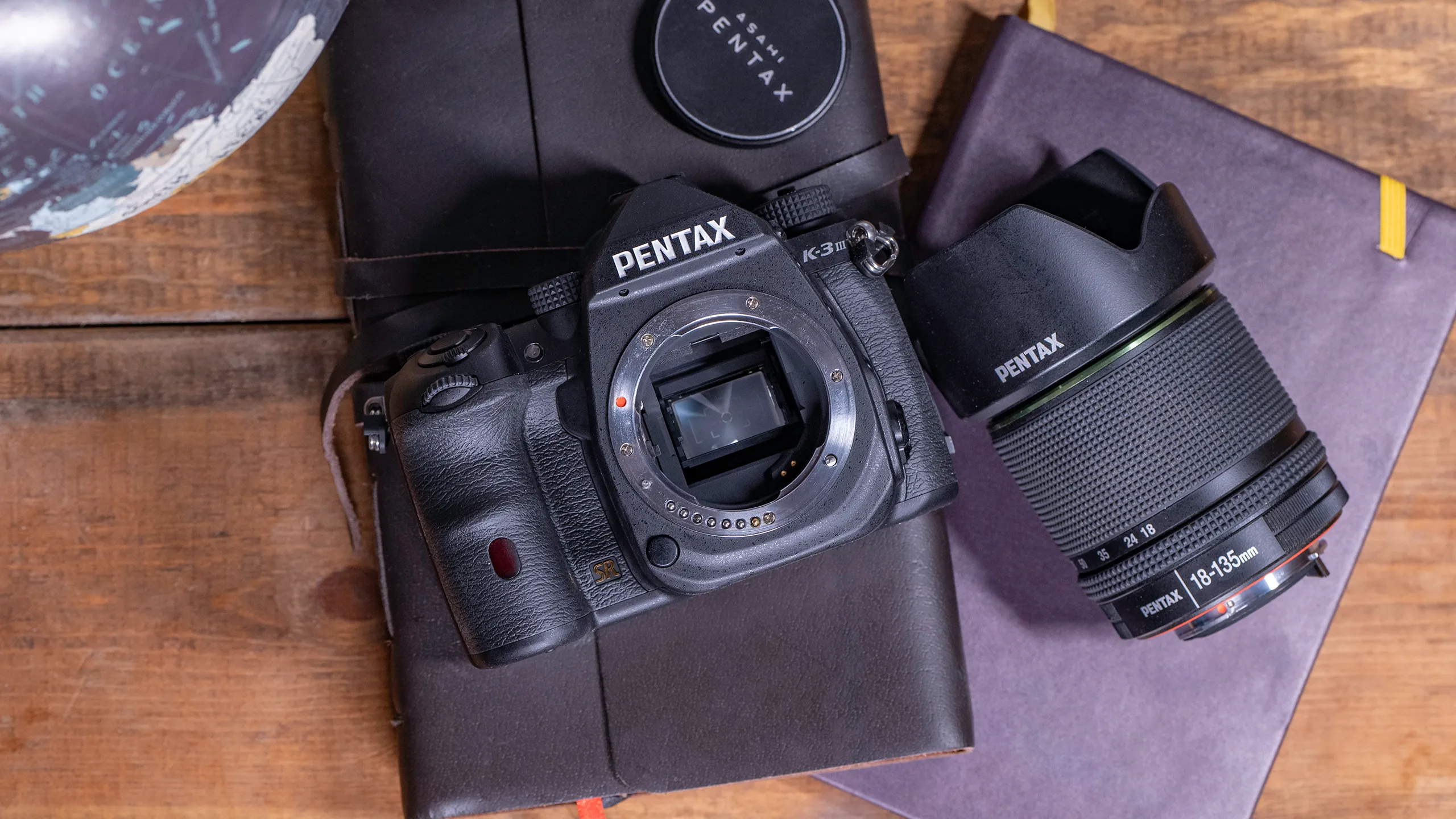
Some cameras sell on specs, then fade once the next launch steals the room. The Pentax K 3 Mark III is not acting like that kind of camera in the U.S. market. Enthusiast demand keeps circling back because this APS-C DSLR camera offers something newer bodies often avoid: a serious optical viewfinder, weather-ready build, in-body stabilization, and full commitment to the Pentax way of shooting. For buyers watching dealer pages, used counters, and restock alerts, the issue is not hype alone. It is whether a returning batch is worth acting on before prices jump or clean bodies vanish again. That is why practical camera gear coverage matters when stock signals get messy. A restock can mean dealer inventory, direct-store movement, a kit bundle, or trade-in flow. The smart buyer reads those signals before clicking buy. This camera makes the chase feel reasonable for still photographers who want a tactile tool, not a tiny computer with a lens mount.
Why This Restock Story Feels Different for U.S. Camera Buyers
Restock stories usually belong to new mirrorless bodies, viral compact cameras, or limited-edition color runs. This one feels different because the demand is coming from photographers who already know what they want. They are not asking whether a DSLR is trendy. They are asking whether this one still solves a problem their current camera does not. That changes the whole buying mood. The chase is less about owning the newest box and more about holding onto a style of shooting that still works.
DSLR fans are not shopping like mirrorless buyers
A mirrorless shopper often compares autofocus modes, video codecs, subject tracking, and screen movement. That makes sense for wedding hybrids, YouTube creators, and parents who need a camera to do a bit of everything. A Pentax DSLR buyer tends to start from another place. The first question is often, “How does it feel through the finder?”
That sounds old-fashioned until you spend a Saturday shooting birds at a park in Ohio or documenting a high school baseball game under pale spring light. An optical viewfinder camera does not show a preview simulation. It shows the scene as light. Some photographers trust that more. They time gestures differently. They wait longer. They stop checking the rear screen every ten seconds.
There is also a comfort factor that spec sheets rarely capture. A DSLR with a deep grip can feel steadier with gloves, longer lenses, and cold fingers. If you shoot outdoors in Michigan in November, that matters more than a thinner body. A camera that feels a little heavy at the kitchen table may feel balanced on a trail.
The counterintuitive part is that slower feedback can make some people shoot better. Less preview means fewer tiny corrections after every frame. You read the light, commit, and move on. That habit is not for every buyer, but for the right one it becomes part of the pleasure.
Small batches create louder demand signals
When a mass-market camera sells out, the noise can be misleading. A retailer may have moved thousands of units, or an algorithm may have pushed a short deal. A niche DSLR behaves another way. A thin batch can disappear without ever touching a broad audience.
That is why U.S. buyers watching the K-3 III need a calmer approach. A “back soon” note, a kit that appears for a day, or a clean used body listed by a trusted dealer may say more than a social feed full of excitement. B&H Photo has shown discontinued or no-longer-available labels on some listings, while Ricoh-related pages and the used market can still shape what buyers see week to week. Those signals are mixed, not simple.
Local camera shops add another layer. A store in Portland, Austin, or Minneapolis might receive a trade-in from a long-time Pentax owner and sell it before a national search page catches up. That kind of inventory never feels like a public restock, yet it feeds the same demand. Serious buyers learn to call, not only refresh tabs.
A good example is the photographer who already owns DA Limited primes and a weather-sealed zoom. For that person, a body-only listing is not a casual purchase. It may be the easiest way to extend a lens set that took years to build. In a smaller system, restock demand is often less about novelty and more about protecting past investment.
Pentax K 3 Mark III Restocking Shows What Enthusiasts Still Value
The strongest case for this camera is not that it beats every modern body on a chart. It does not need to. Its appeal comes from a set of choices that fit certain photographers better than the broader market admits: a bright finder, deep controls, tough sealing, stabilized K-mount lenses, and a body that rewards people who want to set the shot themselves. That is a sharper promise than “does everything.” It tells you who the camera is for.
The optical viewfinder changes the shooting rhythm
Ricoh’s official K-3 III specifications page lists a 25.73 effective megapixel APS-C sensor, a pentaprism finder with about 100% coverage, and about 1.05x magnification. Those numbers matter, but the experience matters more. A large finder makes framing feel less cramped, which helps when you shoot people, wildlife, cars, street scenes, or landscapes from awkward angles.
That is the quiet reason enthusiasts keep watching this body. The camera does not try to turn every scene into a menu decision. The finder invites patience. The grip gives your hand a stable hold. The top controls and rear buttons help you change settings without treating the rear screen as command central.
Battery life is part of the feel too. Optical viewing means you are not powering a display for every second of composition. On a long walk, that changes your habits. You can leave the camera ready at your side and raise it when the light breaks through trees, instead of thinking about power drain before the shot exists.
There is friction, though. If you expect exposure preview in the finder, you will miss it. If you grew up on live histograms and face boxes, the DSLR rhythm may feel bare at first. Yet that bare feeling is exactly what some photographers want. It returns attention to timing, stance, lens choice, and light.
Why K-mount glass keeps buyers watching
Pentax K-mount lenses are the hidden force behind this demand. A body can be replaced, but a lens shelf carries memory. Someone with a DA 20-40mm Limited, a 55-300mm PLM, and an old manual 50mm has more than gear. They have a way of seeing.
In-body shake reduction makes that lens shelf more useful. Stabilization in the body means many older lenses gain a steadier hand, even if they were built long before modern electronic correction became common. That is a serious reason to stay inside the system. It also makes used lens hunting feel less risky for buyers who know what focal lengths they prefer.
There is a learning benefit here. Older glass can teach distance, aperture, and patience in a way that endless automation does not. Put a compact prime on the camera and you start noticing where your feet should go. That kind of practice may sound plain, but it often improves photos faster than another menu setting.
A non-obvious benefit shows up in bad weather. A hiker in Colorado, a parent shooting a rainy soccer match in Pennsylvania, or a railfan standing near a windy platform in Illinois may care less about internet charts than about whether the body feels ready to work. Pair it with the right weather-resistant glass and the APS-C DSLR camera starts to look less nostalgic and more practical.
How to Judge a Restock Before You Buy
The hardest part is not deciding whether the camera is appealing. The hard part is reading the listing. In a tight market, the same body can appear as new old stock, a dealer kit, a return, an open-box unit, a gray-market import, or a used listing with a bright photo and weak details. Those are not the same deal. Scarcity can make a fair price feel urgent and a bad price feel normal. Your job is to separate signal from pressure.
New, used, demo, and gray-market listings are not the same
A new U.S. authorized-dealer body gives you the cleanest path on warranty and support. A demo body may be fine, but ask how it was handled and whether every accessory is included. Used bodies can be strong buys when the dealer grades them clearly, shows real photos, and offers a return window.
Gray-market listings need extra caution. The price can look tempting, yet warranty support may not match a U.S. unit. That matters more on a complex DSLR than on a cheap accessory. Repair paths, firmware support, and return terms should be part of the buying decision, not fine print you read after the box arrives.
Ask about shutter count when possible, but do not treat it as the only truth. A low-count camera can still have impact damage, moisture marks, or a scratched rear screen. A higher-count body from a careful hobbyist may be cleaner than a demo unit handled by hundreds of strangers. Condition has a story. Make the seller tell it.
Here is a simple sequence that helps: check the seller, confirm the exact kit, read the return policy, compare recent used prices, and inspect whether the charger, battery, strap, caps, and manuals are present. For deeper gear planning, keep a placeholder for your own camera buying checklist so readers can move from interest to decision without guessing.
Body-only deals can hide the real cost
A body-only price looks clean, but it can mislead first-time Pentax buyers. You may still need a lens, spare battery, SD cards, and a carry setup that suits the weight. If you plan to shoot wildlife, the cost of a long lens will matter more than a small change in body price.
This is where the K-mount ecosystem rewards patient buyers. Pentax K-mount lenses range from small primes to sealed zooms, and the used market can be friendly to photographers who do not need the newest badge. A buyer moving from a smartphone or compact camera should not spend the entire budget on the body and then settle for a weak lens.
Think in terms of a working kit. For travel, a normal zoom and one small prime may beat three random lenses. For backyard birds, a telephoto matters more than a fast street lens. For family events, a flash and extra battery may add more value than another vintage prime.
The unexpected point is that a higher body price may be acceptable if it comes with the right lens or warranty. A cheap listing with no protection, vague condition, and a poor kit lens can cost more in the end. Restock fever pushes people toward speed. Your edge is slowing down for ten minutes before paying.
Who Should Buy This APS-C DSLR Now
This camera is not for everyone, and that is part of its charm. The best buyer is not chasing the broadest feature set. The best buyer wants a stills-first machine with muscle, weather confidence, a deep grip, and a viewfinder that makes photography feel physical again. If that sounds too specific, good. A camera with a clear identity saves you from buying the wrong tool.
Outdoor photographers get the strongest case
Landscape, hiking, nature, and travel photographers have the clearest reason to care. A sealed DSLR body with stabilization and dual card slots fits long days outside. Dual slots matter when a trip cannot be repeated. A bad card should not erase a morning in the Smokies or a rare bird sighting along the Texas coast.
The K-3 III can also shoot fast bursts, which helps with wildlife and sports. It will not behave like the newest mirrorless bodies with subject recognition covering the frame, so technique still matters. You need to understand focus area choice, shutter speed, stance, and the limits of the lens in your hands.
Think of a weekend in Acadia, where fog moves across the rocks and the light shifts every few minutes. You are wearing a jacket, the wind is up, and the trail is damp. A compact body with tiny buttons may look appealing online, but a firm grip and clear finder can be the difference between steady shooting and constant fiddling.
That may sound like a flaw. For some, it is the point. The camera asks more from you, but it gives back a strong connection to the act of shooting. A photographer who enjoys that exchange may find it more satisfying than a body that tries to predict every move.
Hybrid creators may feel the limits sooner
Video shooters should be more careful. The camera offers 4K recording, headphone and microphone connections, and a sturdy body, so it can handle occasional clips. It is not the most natural choice for someone whose work is built around vlogging, gimbal use, face tracking, or long-form video production.
A YouTuber filming product reviews in a bedroom studio will likely prefer a mirrorless body with easier continuous AF in video and a screen setup made for self-recording. A still photographer who records short clips during a road trip may feel fine. Those are different lives, even if both people say they want “photo and video.”
The practical split is simple. If your final output is mostly photos, the K-3 III deserves a look. If your final output is mostly talking-head clips, tutorials, and reels, another system may save time. Buying against your real use always gets expensive.
For readers comparing systems, a future internal link to APS-C camera comparisons can help separate stills-first buyers from hybrid creators. The K-3 III makes the strongest case when the photo comes first and the clip comes second.
Conclusion
The renewed attention around this camera says less about nostalgia and more about fit. Many photographers are tired of bodies that feel designed for everyone at once. The Pentax K 3 Mark III offers a narrower promise: a tough APS-C DSLR camera for people who enjoy optical framing, direct control, and the feel of a camera built around still images. That promise will not pull every buyer away from mirrorless. It does not have to.
If you already own Pentax glass, a clean restock or trusted used listing deserves serious attention. If you are new to the system, slow down and price the full kit before reacting to a headline. The best move is to buy the camera only when the listing, warranty, lens plan, and return policy all make sense. Enthusiast demand can create pressure, but patience still wins. Watch the dealers, know your budget, and choose the body because it fits your shooting life.
Frequently Asked Questions
Is the K-3 III still worth buying for still photography?
Yes, for stills-first photographers who want a tough DSLR, optical finder, strong controls, and access to Pentax glass. It makes less sense for buyers who need the newest video tools or mirrorless-style subject tracking across the frame.
Why are photographers still interested in a Pentax APS-C DSLR camera?
The appeal comes from handling, weather sealing, in-body stabilization, and the optical finder experience. Many owners also have Pentax lenses already, so a newer body can extend the life of a system they know well.
What should I check before buying a restocked K-3 III?
Confirm the seller is trusted, the warranty terms are clear, and the exact kit contents match the listing. Check whether it is new, open-box, demo, used, or gray-market, since each one carries different risk.
Is the K-3 III a good camera for beginners?
It can be, but only for patient beginners who want to learn exposure, lenses, and DSLR handling. A casual buyer may prefer a lighter mirrorless kit with easier autofocus and more beginner-friendly video features.
Which lenses make the most sense with this camera?
Weather-resistant zooms fit outdoor use, while Limited primes suit travel, street work, and everyday shooting. The best choice depends on your subjects, but avoid spending the whole budget on the body alone.
How does an optical viewfinder camera feel different?
You see the scene through the lens using real light, not an electronic display. That can feel more natural for timing, framing, and long shooting sessions, though you lose exposure preview inside the finder.
Should video creators buy this camera?
Only if video is a side need. It can record solid clips, but creators who rely on continuous video autofocus, front-facing screens, and long recording sessions will likely be happier with a mirrorless body.
Are used K-3 III bodies a safe buy?
They can be safe when bought from a reputable dealer with clear grading, real photos, and a return window. Avoid vague listings, missing accessories, unclear shutter history, or prices that look suspiciously low.